Contador web

23 de agosto de 2012

Leni Riefenstahl


Olympia


Leni Riefenstahl


Helene Bertha Amalie «Leni» Riefenstahl
1902 - 2003 

Bailarina, Actriz, directora y fotografo alemana nacida en Berlin elevada entre los mas grandes directores cinematograficos de todos los tiempos pero tristemente conocida por sus grandes producciones propagandisticas de la alemania nazi.
Su primer paso en la direccion cinematografica lo hizo con la pelicula "La luz azul" (1932) que la proyecto internacionalmente al ser premiada en el festival internacional de cine de Venecia.
Tras escuchar a Hitler en uno se sus mitines, se ofreció a dar su talento y colaboracion con el partido nazi. Su premio llegó pronto de la mano de Rudolf Hess y la pasion del propio Hitler tras su pelicula ofreciendola documentar la concentracion nacional socialista del Campo Zeppelin en Nuremberg, realizando lo que hoy se conoce como La Trilogía de Núremberg, uno de los documentales político-propagandísticos más efectivos jamás filmado y que se realizó los años 1933,1934 y 1935.
Su siguiente trabajo fué "Juegos Olímpicos de Berlín 1936". Trabajo del que tecnicamente, postproduccion incluida, sigue siendo un hito en la forma de rodaje y medios visuales. Por supuesto de fuerte controversia por su enfoque politico hacia la propaganda nazi. Para su promocion, viajó a Estados Unidos, pero la persecucion hacia los judios produjo que Hollywood rechazase su distribucion.
Nunca pudo huir del estigma del nazismo, a pesar de que al cabo de los años, solo se la acuso de ser simpatizante e incluso fue recluida en un siquiatrico para desnazificarla.La realidad es que estaba demasiado integrada en las altas esferas del nazismo y llegó a negar el holocausto.
Al rehacer su vida, tras ser embargada. se dedicó a la fotografia de el pueblo Nuba africano y posteriormente a la vida submarina.
Con cancer y problemas dorsales por un accidente en Helicoptero, murió a los 101 años en su casa barcaza de Pöcking, Baviera a orillas del Danubio


Jesse Owens, que conquistó cuatro medallas de oro en Berlín 1936


German 


Tänzerin, Schauspielerin, Regisseurin und Fotografin in Berlin deutsche High gehören zu den größten Filmemacher aller Zeiten geboren, aber leider für seine große Produktion Propaganda des nationalsozialistischen Deutschland bekannt.
Ihr erster Schritt in Richtung filmische Sie mit dem Film "Blue Light" (1932), dass das Projekt international auf dem internationalen Filmfestival in Venedig verliehen hat.
Nach dem Abhören Hitler in einer seiner Sitzungen, bot er an, sein Talent und seine Zusammenarbeit mit der Nazi-Partei zu geben. Seine Belohnung kam früh in den Händen von Rudolf Heß und Hitler-Film nach eigenen Leidenschaft bot ihn dem nationalsozialistischen Konzentrations Zeppelinfeld in Nürnberg zu dokumentieren, Durchführung, was heute als der Trilogie von Nürnberg bekannt, einer der politischen Propaganda-Dokumentarfilm effektivste jemals gefilmt und hielt die Jahre 1933.1934 und 1935.
Sein nächstes Werk war "Berlin Olympischen Spiele 1936." Welche technisch funktionieren, einschließlich Postproduktion, bleibt ein Meilenstein in der Art und Weise der Film-und visuellen Medien. Kurs von starken Kontroversen für die politische Annäherung an Nazi-Propaganda. Für seine Promotion ging er nach Amerika, aber die Verfolgung gegenüber den Juden kam, um seine Verteilung Hollywood abzulehnen.
Er konnte sich nie entgehen, das Stigma des Nazismus, auch wenn nach dem Jahr, nur beschuldigte sie, ein Sympathisant und war sogar in eine psychiatrische zu desnazificarla.La Realität zugelassen ist, dass auch er wurde in den oberen Rängen des Nationalsozialismus integriert und kam den Holocaust zu leugnen.
Um ihr Leben wieder aufzubauen, nachdem sie beschlagnahmt. wurde die Fotografie der afrikanischen Nuba Menschen und dann des Lebens im Meer gewidmet.
Bei Krebs-und Rückenproblemen für einen Hubschrauber Unfall, starb im Alter von 101 zu Hause Pöcking Kahn, Bayern an der Donau


Dancer 1923 


English 

Dancer, actress, director and photographer born in Berlin German high among the greatest filmmakers of all time but sadly known for its large production propaganda of Nazi Germany.
Your first step in the direction cinematic you did with the movie "Blue Light" (1932) that the project internationally to be awarded at the international film festival in Venice.
After listening to Hitler in one his meetings, he offered to give his talent and collaboration with the Nazi party. His reward came early at the hands of Rudolf Hess and Hitler's own passion movie after offering it to document the National Socialist concentration Zeppelin Field in Nuremberg, performing what is now known as The Trilogy of Nuremberg, one of the political-propaganda documentary most effective ever filmed and held the years 1933.1934 and 1935.
His next work was "Berlin 1936 Olympic Games." Which technically work, including postproduction, remains a milestone in the way of filming and visual media. Course of strong controversy for its political approach to Nazi propaganda. For his promotion, he went to America, but the persecution towards Jews came to Hollywood reject its distribution.
He could never escape the stigma of Nazism, even though after year, only accused her of being a sympathizer and was even admitted to a psychiatric to desnazificarla.La reality is that he was too integrated into the upper echelons of Nazism and came to deny the Holocaust.
To rebuild their lives after being seized. was devoted to photography of the African Nuba people and then to marine life.
With cancer and back problems for a helicopter accident, died at age 101 at home Pöcking barge, Bavaria on the Danube


The lighting of the Olympic torch in Olympia 1938


Leni Riefenstahl by Alexander Binder 1929 


Tattoos 1980


 Stürme über dem Montblanc 1930 


Dinkas, Sudan Africa


 1932 SOS Eisberg


 Leni with Mick Jagger


 Olympia 1936 


 Under water Crocodile fish Red sea


Private 1937


 Horst Kettner, Leni's permanent assistant since 1968


Private 1940


Nuba The young shepherds are decorated with a simple belt made of ribbons and nutlike fruits around their hips.


 Adolfo Hitler y Leni Riefenstahl


Nuba of Kau


Adolfo Hitler y Leni Riefenstahl entre otros


Nuba Two young Nuba are playing their lyre in the inner yard of a house


War marriage ceremony with major Peter Jacob in 1944


A Nuba is carrying Leni's camera bag at 45 degrees above zero in the Sudan


Nubas of Kau


Nubas of Kau


16 de agosto de 2012

Harold E. Edgerton


House party


Harold E. Edgerton


Hammer smashing light bulb, 1933


Harold Eugene "Doc" Edgerton
1903 - 1990

Profesor de ingeniería eléctrica en el Instituto de Tecnología de Massachusetts nacido en Fremont, Nebraska al que se le acredita en gran parte con la transformación del estroboscopio de un instrumento de laboratorio oscuro en un dispositivo común.
Su comienzo fué de la mano de la inspiracion que le dió Charles Stark Draper para fotografiar objetos cotidianos con flash electrónico: la primera fue el chorro de aguade un grifo.
En 1937 se asocia con el fotografo Gjon Mili utilizando el equipo estroboscópico, en particular, las unidades múltiples de estudio flash electrónico para realizar bellas fotografias y siendo pioneros en el uso de fotografias para eventos rapidos.
Tuvo un papel importante en la fotografía y el registro de los ensayos nucleares de los Estados Unidos a través de los años cincuenta y sesenta y colaboró con el submarinista Jacques Cousteau en el diseño de los equipos subacuáticos de fotografía con flash electrónico y mas tarde desarroyó las tecnicas del sonar submarino para el descubrimiento del buque Britannic.
En 1940, su cortometraje de alta velocidad estroboscópica "Quicker'n a Wink" ganó un Oscar por sus efectos de imagenralentizada que el ojo humano no es capaz de captar.


Football kick 1934


Professor of electrical engineering at the Massachusetts Institute of Technology was born in Fremont, Nebraska who is largely credited with transforming the stroboscope from an obscure laboratory instrument into a common device.
Its beginning was from the hand of the inspiration that gave Charles Stark Draper to photograph everyday objects with electronic flash: the first was the stream of water from a faucet.
In 1937 he associated with the photographer Gjon Mili using strobe equipment, including multiple units of studio electronic flash for beautiful photographs and pioneering the use of photographs for fast events.
Played an important role in photography and recording nuclear tests the United States through the fifties and sixties and worked with the diver Jacques Cousteau in the design of underwater equipment for electronic flash photography and later unfoldment the submarine sonar techniques for the discovery of the ship Britannic.
In 1940 his short film high-speed strobe "Quicker'n to Wink" won an Oscar for its effects imagenralentizada the human eye can not grasp.


Death of a light bulb 1936


Densmore Shute Bends the Shaft 1936


Jim Dotson Hits the Softball 1938


Tennis Player 1938


Pete Desjardin Diving, 1940


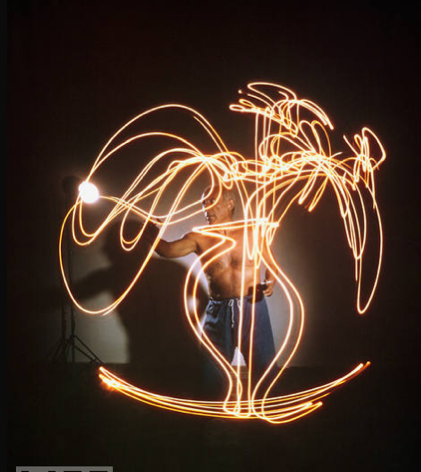
The Penlight Drawings, 1949


Milk drop coronete 1957


Bullet trhough three balloons 1959


Self-Portrait with Balloon and Bullet, 1959


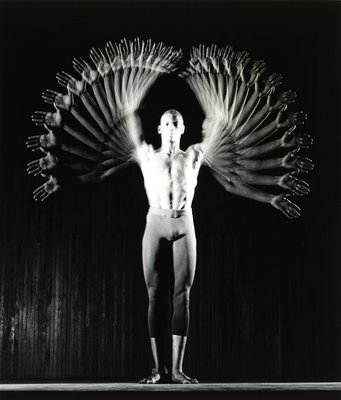
Gus Solomons 1960


Shooting the apple 1964


Card hit by a 30 calibre bullet, 1970


Harold E. Edgerton, scuba-diving under Calypso


Salvador dalí


9 de agosto de 2012

Henri Cartier-Bresson


Henri Cartier-Bresson


Alicante Spain 1933


Henri Cartier-Bresson
1908 - 2004

Fotografo frances conocido como el padre del moderno fotoperiodismo y cofundador de la agencia "Magnum", nacido en Chanteloup-en-Brie, Seine-et-Marne, Francia, cerca de Paris.
Cubrio la guerra civil española desde el bando republicano. Fotografió a grandes personajes del siglo XX como Pablo Picasso, Henri Matisse, Marie Curie, Édith Piaf, Fidel Castro y Ernesto "Che" Guevara ademas de cubrir la muerte de Gandhi y la entrada triunfal de Mao Zedong en Pekin. Tambien cuenta con ser el primer fotografo extranjero que pudo entrar en la URSS tras la muerte de Stalin.
Henri Cartier-Bresson, tras terminar sus estudios de pintura se sumerge en los circulos surrealistas parisinos y decide dedicarse a la fotografia.
Su estilo humanista lo lleva a fotografias lugares de Asia, Africa y America aparte de realizar reportajes en Europa.
Su devaneo con el cine lo realiza como asistente de director frances Jean Renoir.


Moma Santa Clara 1934


Français
Photographe français connu comme le père du photojournalisme moderne et co-fondateur de l'agence «Magnum» est né à Chanteloup-en-Brie, Seine-et-Marne, France, près de Paris.
Il a couvert
la guerre civile espagnole du côté républicain. Il a photographié figures majeures du XXe siècle tels que Pablo Picasso, Henri Matisse, Marie Curie, Edith Piaf, Fidel Castro et Ernesto "Che" Guevara également couvrir la mort de Gandhi et de l'entrée triomphale de Mao Zedong à Beijing. Il est également devenu le premier photographe étranger pourrait entrer dans l'URSS après la mort de Staline.
Henri Cartier-Bresson
, après avoir terminé ses études en peinture est immergé dans les cercles parisiens surréalistes et décide de se consacrer à la photographie.
Ses photographies
de style humanistes conduit à certaines régions d'Asie, d'Afrique et d'Amérique en dehors du reportage en Europe.
Son flirt avec
le film est fait comme un assistant réalisateur français Jean Renoir.


Henri Cartier-Bresson, NYC, 1935


English 
 
French photographer known as the father of modern photojournalism and cofounder of the agency "Magnum" was born in Chanteloup-en-Brie, Seine-et-Marne, France, near Paris.
He covered the Spanish Civil War from the Republican side. He photographed major figures of the twentieth century as Pablo Picasso, Henri Matisse, Marie Curie, Edith Piaf, Fidel Castro and Ernesto "Che" Guevara also cover the death of Gandhi and the triumphal entry of Mao Zedong in Beijing. It also has become the first foreign photographer could get into the USSR after Stalin's death.
Henri Cartier-Bresson, after finishing his studies in painting is immersed in the Parisian Surrealist circles and decided to devote himself to photography.
His humanistic style photographs leads to parts of Asia, Africa and America apart from reportage in Europe.
His flirtation with the film is done as an assistant with the
french director Jean Renoir.


Moscú, URSS, 1954


Wrestlers on Independence Day, Ulaanbaatar, Mongolia 1958


Estambul, Turquía 1964 


Hockey Game Stanley Cup. Inside locker room after game. Montreal, Canada, 1965


Encierro de Pamplona 1960s


Peter and Paul's fortress on the Neva river. Leningrad Russia 1973


Romania in a train 1975


Lago Tanganyika


Italy


India


Henri Cartier-Bresson